
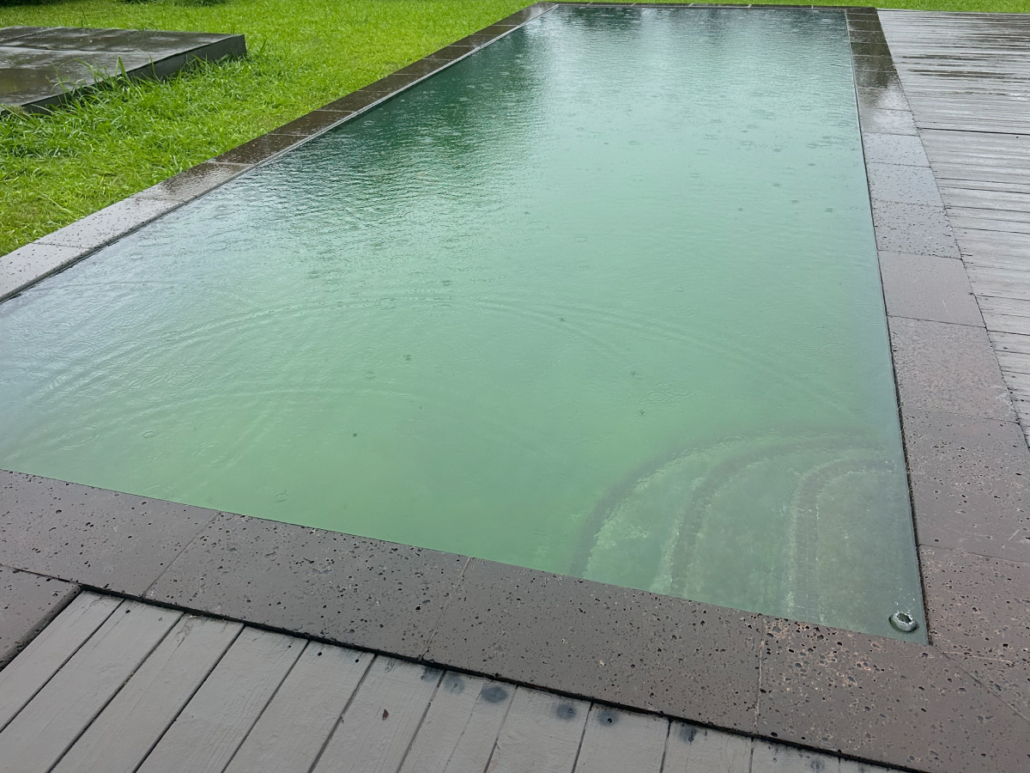
Rainy season in Oahu doesn’t just change the weather — it directly affects pool cleaning in Oahu, particularly water chemistry. Increased rainfall, runoff, and reduced sunlight can quickly disrupt chlorine levels, pH balance, and overall water clarity. This guide explains how Oahu’s rainy season impacts pool water chemistry and what pool owners should understand before problems appear.
Table of Contents
- Why Rain Has a Bigger Impact on Pools in Oahu
- How Rain Affects Chlorine Levels
- How Rain Impacts Pool pH and Alkalinity
- Runoff, Debris, and Organic Contaminants
- Why Algae Problems Increase During Rainy Season
- Should Pool Chemistry Be Adjusted After Heavy Rain?
- How This Fits Into Ongoing Pool Maintenance in Oahu
Why Rain Has a Bigger Impact on Pools in Oahu
Pools in Oahu respond differently to rain than pools in drier or cooler regions.
- Frequent rainfall dilutes pool water more often
- Warm temperatures allow algae to grow even during overcast weeks
- Organic debris washes into pools from surrounding areas
- Less consistent sunlight reduces chlorine effectiveness
Because pools are used year-round, chemistry changes during rainy season tend to compound faster.
How Rain Affects Chlorine Levels
Rainwater does not contain chlorine. When heavy rain adds volume to a pool, it dilutes existing chlorine levels.
- Free chlorine drops after storms
- Sanitization becomes less effective
- Bacteria and algae gain an opportunity to grow
Without adjustment, pools can appear fine at first and then become cloudy or green days later.
How Rain Impacts Pool pH and Alkalinity
Rainwater is naturally slightly acidic. Repeated rainfall can shift pool pH and alkalinity out of range.
- pH levels may drop, increasing corrosion risk
- Alkalinity instability makes pH harder to control
- Chemical balance becomes less predictable
These changes often require correction even if the pool was balanced before the storm.
Runoff, Debris, and Organic Contaminants
Rain washes oils, dirt, leaves, pollen, and other organic material into pools.
- Increased debris load stresses filtration systems
- Organic contaminants consume chlorine
- Fine particles contribute to cloudy water
This is one reason pools may require extra attention after periods of heavy rain.
Why Algae Problems Increase During Rainy Season
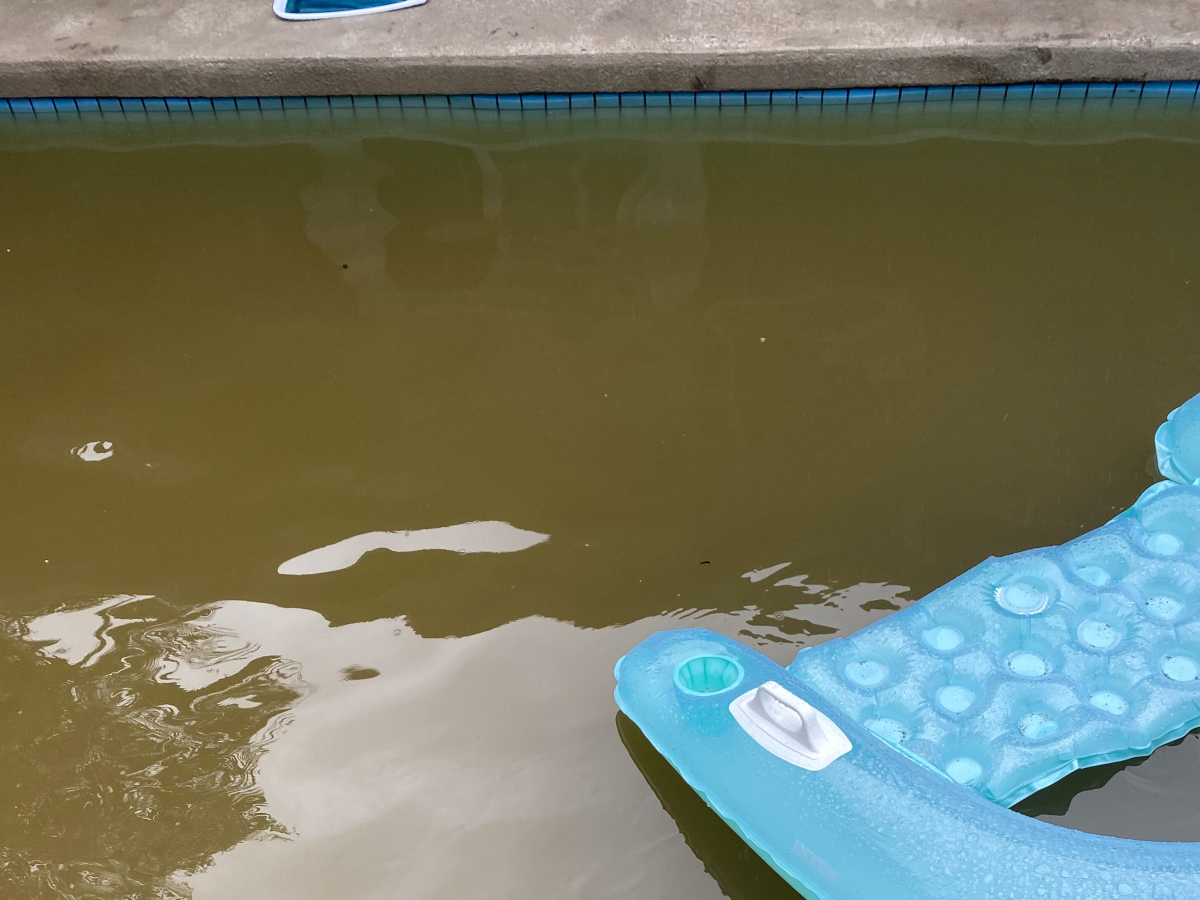
Algae thrives when chlorine levels drop and organic material increases.
- Warm water temperatures remain ideal for growth
- Reduced sunlight does not stop algae development
- Poor circulation during storms can worsen conditions
Rainy season creates ideal conditions for algae if chemistry is not closely monitored.
Should Pool Chemistry Be Adjusted After Heavy Rain?
In many cases, yes.
- Water testing is often needed after significant rainfall
- Chlorine levels may require adjustment
- pH and alkalinity should be checked
Ignoring post-rain chemistry changes can allow small issues to escalate.
How This Fits Into Ongoing Pool Maintenance in Oahu
Rainy season highlights the importance of consistent pool maintenance.
Pools that are regularly monitored tend to recover faster from storms, while pools that are not maintained consistently are more likely to develop ongoing water quality issues.
Related reading:
- How Pool Cleaning Works in Oahu: Costs, Frequency, and Local Factors
- Why Pool Water Turns Cloudy After Heavy Rain in Oahu
Final Thoughts
Oahu’s rainy season can quietly disrupt pool water chemistry even when pools look clear on the surface. Understanding how rain affects chlorine, pH, and organic load helps pool owners respond early and avoid more serious problems later.
For homeowners who want consistent results during rainy season without constantly adjusting chemistry themselves, working with a professional pool cleaning service in Oahu can help keep pools balanced and protected year-round.

