
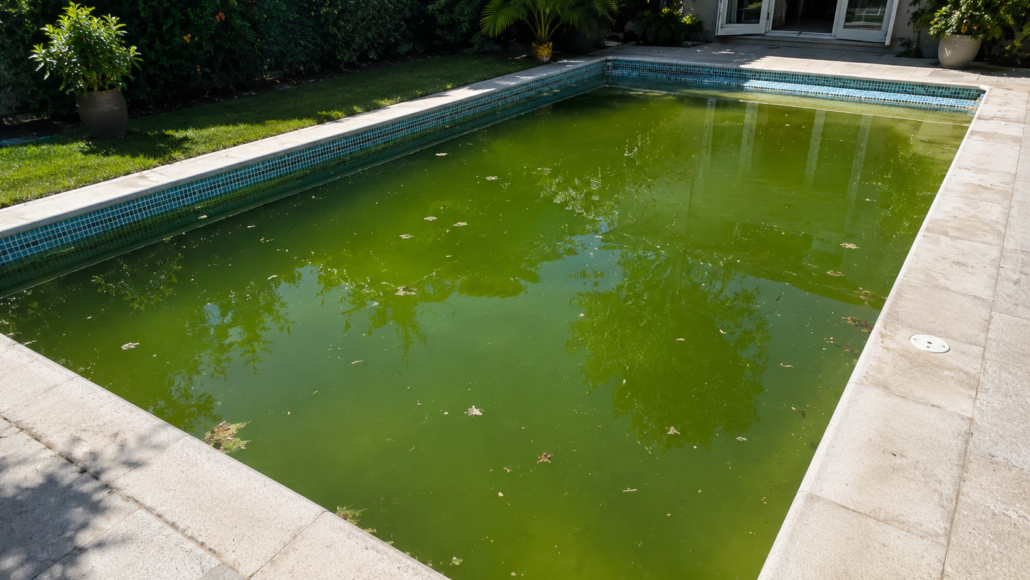
Many pool owners in Oahu are frustrated when algae keeps coming back after shocking a pool in Oahu. Even when the water looks clear at first, algae can reappear days later if underlying conditions are not addressed. This article explains why algae keeps coming back even after shocking a pool in Oahu and what usually causes repeat outbreaks.
Quick diagnosis: If algae keeps coming back after shocking a pool in Oahu, the cause is usually a combination of high chlorine demand, poor circulation, and incomplete filtration rather than insufficient shock alone.
Table of Contents
- What Pool Shock Actually Does
- Why Shocking a Pool Doesn’t Always Solve Algae Problems
- Chlorine Demand and Organic Load in Oahu
- Poor Circulation and Hidden Algae
- Filtration Issues That Allow Algae to Return
- Rain, Sun, and Warm Water as Algae Triggers
- How This Connects to Pool Cleaning in Oahu
What Pool Shock Does to Algae (and Why It’s Temporary)
Pool shock is a concentrated dose of chlorine designed to quickly raise sanitizer levels and kill bacteria and algae. It works as a short-term treatment, not a long-term solution.
Shock can eliminate visible algae, but it does not correct the conditions that allowed algae to grow in the first place.
Why Shocking a Pool Doesn’t Always Eliminate Algae
Algae often returns after shocking because the root causes remain.
- Chlorine levels drop again after shock dissipates
- Organic material continues to consume sanitizer
- Water balance may still be out of range
Without addressing these factors, algae regrowth is likely.
Why Algae Comes Back Faster in Oahu Pools (Chlorine Demand & Organic Load)
Oahu’s environment creates higher chlorine demand than many other regions.
- Warm water accelerates algae growth
- Sunscreen, body oils, and debris increase organic load
- Rain introduces additional contaminants
High chlorine demand makes it harder to maintain consistent sanitation, especially in Hawaii’s year-round warm water conditions.
Hidden Algae: How Poor Circulation Allows Algae to Survive
Algae often survives in areas with weak circulation.
- Dead spots behind ladders and steps
- Corners and shaded areas
- Inside plumbing and filters
Shock may not fully reach these areas, allowing algae to return.
Filtration Problems That Let Algae Come Back
Even dead algae must be removed from the water.
- Filters may be undersized or dirty
- Fine particles pass through inefficient filtration
- Backwashing or cleaning may be overdue
Poor filtration allows algae to re-establish quickly.
How Rain, Sun, and Warm Water Trigger Algae Growth in Oahu
In Oahu, algae growth can occur year-round.
- Rain dilutes chlorine and adds contaminants
- Sunlight breaks down sanitizer
- Warm water accelerates growth cycles
These conditions make algae control more challenging without consistent maintenance.
How This Connects to Pool Cleaning in Oahu
Recurring algae problems often indicate that pool maintenance routines need adjustment.
Understanding why algae returns helps explain how pool cleaning works in Oahu and why regular monitoring of chemistry, circulation, and filtration is important in Oahu’s tropical climate.
Related reading:
- How Oahu’s Rainy Season Affects Pool Water Chemistry
- Why Pool Water Turns Cloudy After Heavy Rain in Oahu
- How Pool Cleaning Works in Oahu: Costs, Frequency, and Local Factors
Common Questions About Algae After Shocking
Can algae come back even if chlorine levels test normal?
Yes. Algae can survive in low-circulation areas or return quickly if chlorine demand is high and filtration does not fully remove dead algae.
How long after shocking should algae disappear?
Visible algae may clear quickly, but underlying conditions can cause regrowth within days if circulation, filtration, or balance issues remain.
Final Thoughts
When persistent algae problems in Oahu pools continue even after shocking, it is usually a sign that water balance, circulation, or filtration needs attention. Addressing the root causes helps prevent repeat algae outbreaks and maintain clearer pool water.
