
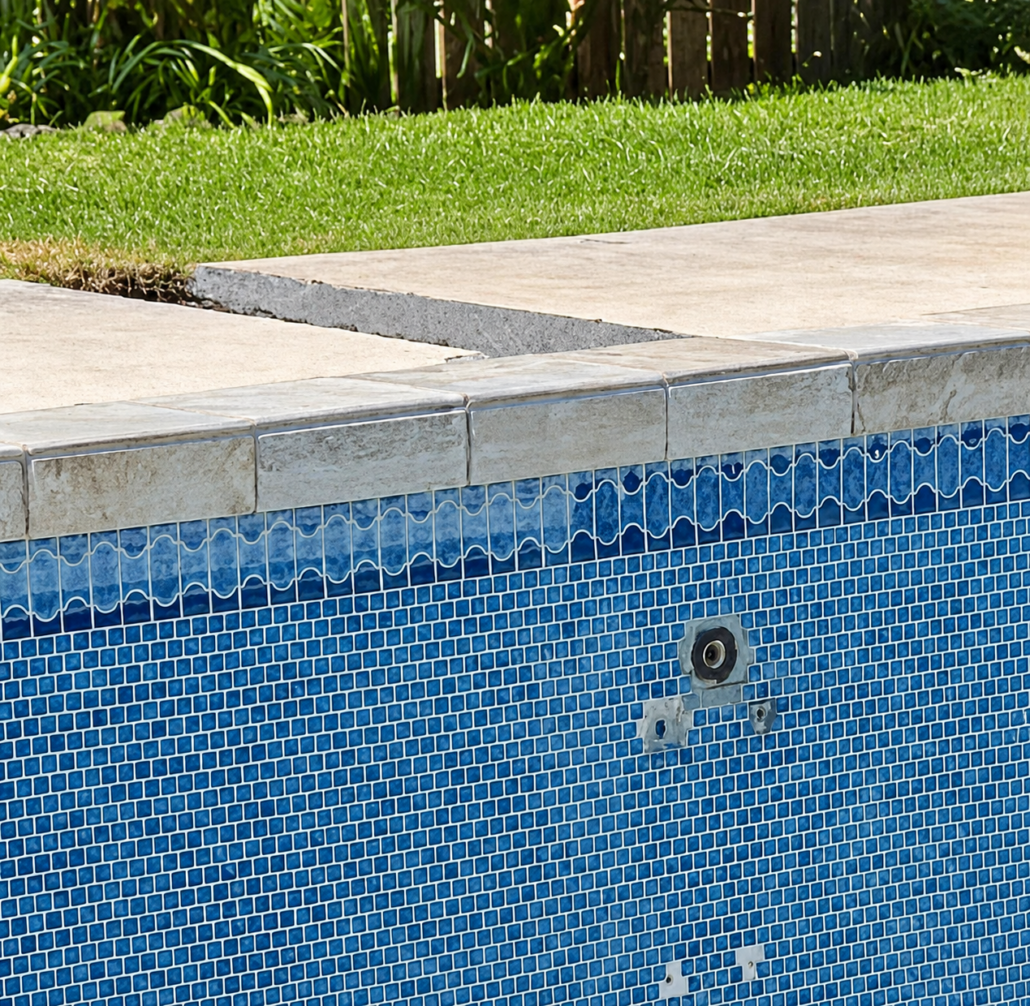
Buildup around a pool waterline forms when oils, sunscreen, body products, dirt, and other contaminants collect at the surface of the water and stick to the pool walls. In Hawaii, frequent swimming, heavy sunscreen use, warm weather, and windblown debris can make waterline buildup especially noticeable.
A light waterline ring may simply need cleaning, but buildup that returns quickly can point to water chemistry, filtration, or maintenance issues that should be addressed as part of regular pool cleaning in Oahu.
Table of Contents
- What Is Pool Waterline Buildup?
- What Causes Buildup Around the Pool Waterline?
- Why Sunscreen Is a Common Cause in Hawaii Pools
- Can Pool Chemistry Cause a Waterline Ring?
- Why Some Pools Develop Waterline Buildup Faster Than Others
- How to Remove Buildup From a Pool Waterline
- How to Prevent Waterline Buildup From Coming Back
- When a Waterline Ring May Be a Different Problem
- Frequently Asked Questions
What Causes Buildup Around the Pool Waterline?
The dark, gray, yellowish, or oily line that sometimes appears around a pool is material that has accumulated where the water meets the pool surface.
Many contaminants that enter a swimming pool do not dissolve completely in the water. Oils in particular tend to migrate toward the surface. As water moves against the walls, these materials can collect along the waterline and gradually stick to tile, plaster, vinyl, fiberglass, or other pool surfaces.
At first, the buildup may feel slightly greasy. If it remains in place, additional dirt and debris can attach to it and make the ring darker and harder to remove.
The appearance of a waterline ring does not necessarily mean that the entire pool is dirty. However, it does show that contaminants are accumulating faster than they are being removed.
What Causes Buildup Around the Pool Waterline?
A pool waterline ring usually comes from a combination of contaminants rather than a single source.
Common contributors include:
- Sunscreen and tanning products
- Natural skin oils
- Lotions and moisturizers
- Hair products and cosmetics
- Sweat
- Dust and dirt
- Pollen and organic debris
- Residue from surrounding landscaping
- Fine particles floating on the water surface
When these materials mix, oily contaminants can act almost like an adhesive for fine dirt. The mixture reaches the edge of the pool and attaches to the surface at water level.
That is why a line of oily residue and dirt can appear darker than the contaminants would look individually.
Why Sunscreen Is a Common Cause in Hawaii Pools
Sunscreen is particularly relevant for pools in Hawaii because it is used so frequently.
Every swimmer wearing sunscreen can introduce some of that product into the water. Waterproof and water-resistant products are specifically designed to remain on skin in water, so some of their ingredients can also be difficult for a pool to remove immediately.
Add body oils, lotions, and frequent swimming, and the amount of oily material entering a heavily used pool can become significant.
This does not mean swimmers should avoid sunscreen. Sun protection is important in Hawaii. It simply means that pools with frequent sunscreen exposure may require more attention to the waterline, filtration, and overall water quality.
A pool that receives guests every day, for example, may develop a visible ring much faster than a similar pool used by only a few people each week.
Can Pool Chemistry Cause a Waterline Ring?
Water chemistry can contribute to buildup, although not every ring around a pool is caused by poor chemistry.
Improperly balanced water can encourage deposits on pool surfaces. Calcium and other minerals can leave a hard, rough line that looks different from the softer, greasy buildup usually described as an oily ring.
Pentair’s pool water chemistry guide explains that white, chalky deposits on pool tiles and equipment can be calcium scale.
The CDC’s healthy swimming guidance also explains why proper pool disinfection and water quality matter for swimmer safety.
This distinction is important.
An oily waterline ring may feel greasy or wipe away relatively easily.
A mineral or calcium deposit is generally harder, rougher, and more firmly attached to the surface.
Sometimes both can exist together. Oils and dirt can collect on an already rough waterline deposit, making the discoloration more noticeable.
This is why identifying what the ring actually consists of should come before choosing a cleaning method.
Why Some Pools Develop Waterline Buildup Faster Than Others
Two pools on Oahu can receive similar maintenance and still accumulate waterline buildup at very different rates.
Swimmer load is a major factor. More swimmers usually mean more sunscreen, body oils, sweat, and personal-care products entering the water.
The surrounding environment matters too. Trade winds can bring dust, pollen, leaves, and fine debris into exposed pools. Nearby landscaping can add additional organic material.
Filtration and circulation also affect how quickly contaminants are removed. If surface water is not moving effectively toward the skimmer, floating material has more opportunity to reach the pool walls.
Weather can change the situation further. Rain and wind may introduce additional debris and alter water conditions, particularly during wetter periods.
Related reading: How Oahu’s Rainy Season Affects Pool Water Chemistry
How to Remove Buildup From a Pool Waterline
The correct cleaning method depends on the pool surface and the type of buildup.
For light oily residue, start with a cleaning product and tool specifically approved for the pool’s surface. Gently cleaning the waterline regularly is preferable to allowing layers of residue to harden over time.
Avoid assuming that a stronger household cleaner is better. Products that are safe for a kitchen or bathroom are not automatically appropriate for a swimming pool. Some can damage surfaces or introduce unwanted chemicals into the water.
Abrasive tools can also scratch certain finishes.
If the buildup is hard and crusty, it may be calcium scale rather than oily residue. Use a cleaning method appropriate for the pool finish. Persistent dark or rust-colored stains may need a different treatment.
How to Prevent Waterline Buildup From Coming Back
Cleaning the visible ring solves the immediate problem. Reducing what causes it helps keep it from returning as quickly.
Regularly brushing and wiping the waterline prevents residue from remaining long enough to become heavily embedded. Skimmer baskets should be kept clear so surface water can move properly through the system, and filtration should be maintained so collected contaminants are actually removed.
The filter also needs periodic attention. A filtration system that is already loaded with debris cannot perform as effectively as one operating properly.
Water chemistry should also remain balanced. The goal is not simply to keep the pool looking clear but to keep sanitation, circulation, filtration, and physical cleaning working together.
For pools that receive a lot of swimmers, waterline cleaning may simply need to be performed more frequently.
When a Waterline Ring May Be a Different Problem
Not every line around a pool has the same cause.
A hard white or gray ring may be calcium scale, rather than oily residue. Rust-colored staining may indicate a metal-related issue. Discoloration that extends below the waterline may have a different cause altogether.
The texture is often a useful clue.
If it feels oily or greasy, organic contamination is more likely. If it feels hard and rough, mineral deposits should be considered.
Repeatedly scrubbing a stain without identifying its cause can waste time and, with the wrong cleaning method, potentially damage the pool finish.
This is another reason regular pool maintenance involves more than making the water look clean. Water chemistry, surfaces, circulation, filtration, and equipment all affect what happens inside the pool.
Related reading: How Pool Cleaning Works in Oahu: Costs, Frequency, and Local Factors
Frequently Asked Questions
Why does my pool have a black ring around the waterline?
A dark waterline ring is often a mixture of body oils, sunscreen, dirt, and other fine contaminants that have collected at the surface and attached to the pool wall. The exact cause depends on the texture and appearance of the buildup.
Does sunscreen cause oily pool residue?
It can contribute significantly. Sunscreen combines with body oils and other contaminants entering the pool, and some of this material can collect along the waterline.
Can I use a household cleaner on my pool waterline?
It is better to use a product specifically approved for your type of pool surface. Household cleaners may contain ingredients that are unsuitable for pool water or may damage certain finishes.
Why does waterline buildup keep coming back?
Frequent swimmers, sunscreen, poor surface circulation, heavy debris exposure, or insufficient waterline cleaning can all cause the ring to return quickly. Recurring buildup is a reason to look at the entire maintenance routine rather than repeatedly cleaning only the visible line.
Is a white ring around the pool the same as an oily ring?
Not necessarily. A hard, rough white ring is more likely to involve mineral or calcium scale, while a typical oily ring tends to contain oils and organic contaminants and may feel greasy.
Keeping the Pool Waterline Clean in Hawaii
Waterline buildup is often the visible result of substances that enter the water every day. In Hawaii, sunscreen, frequent swimming, warm weather, landscaping, and windblown debris can make that accumulation happen quickly.
Cleaning the waterline is part of the solution, but recurring buildup should also prompt a look at circulation, filtration, water chemistry, and the overall maintenance schedule. Consistent professional pool cleaning in Oahu can help keep both the visible pool surfaces and the systems responsible for water quality properly maintained.
